内经比赛|The Huangdi Neijing Competition
*An English translation is available at the end of this post.
本文写于2014年5月28号。现在读起来还是觉得少年心气不可再生。
今天和室友一起去看临床学霸表演赛——方药之星个人赛决赛。
一个环节是学霸们上前来讲述自己队前期准备的论文,一般是一个人讲,一个人负责放映屁屁涕。
我看着这分工合作突然就问了一句,他们怎么不打五禽戏?室友一开始一愣,我又接着说,去年我们这届朗诵内经不也是这样的吗?
去年我们大二,学校开始要求期末成绩除了期末考试还要有平时成绩,除了点点名发发言做做作业默写默写,也不知道哪个老师想出来的——黄帝内经课程还要举行班级朗诵大赛。
由于关系到平时成绩,所以大家还是很——反感的。我们这届临床医学院就是中医三个班,中西医三个班,定向两个班,七年制中医中西医两个班。就这点儿阵容——还要有预赛和复赛。当然这只是个“名分”,不可能把人一个班都刷下去。我们看中的是预赛成绩,就是学院学习部的同学每天早读的时候到每个班根据其出勤读书质量打分。接着就是复赛成绩,大约就是,啊,你们要上台背了,得看看你们背得怎么样,再打分。我能背得怎样啊。当时负责我们班复赛背书的有个一起练五禽戏的师弟,看着我有地方背得支支吾吾的,给我点了点头,下来对我说,我可是给你放了水的啊。可是这依然不能改变我背不下来的事实,此为后话。
好,快要决赛了,要上台背书了。这可是件“大事”啊,学院信息部的同学还在每个班早读的时候采风,做视频。每个班的班委每天早上都提着音响设备在太极大道上追着队形撵,啊,是背景音乐。我们班决定让重量级人物搞个秀场。临床医学院有一支优良的传统队伍,叫传统保健运动队,简称传保队,下设易筋经,五禽戏,功夫太极扇,八段锦和长拳项目。每个项目都有一个总教练和若干副教练。经过多年的建设,接近全民参与,终于总结出了一套在哪儿都看不到的打法,颇具临床医学院的特色。我们班向来比较强悍,五个项目里,就有三个总教练和一个副教练。这些人才可是要拿出来晾晾啊,大有向广大临床学子宣布——你们学的这些功法、教练都是我们班的啊我们班的啊的架势。
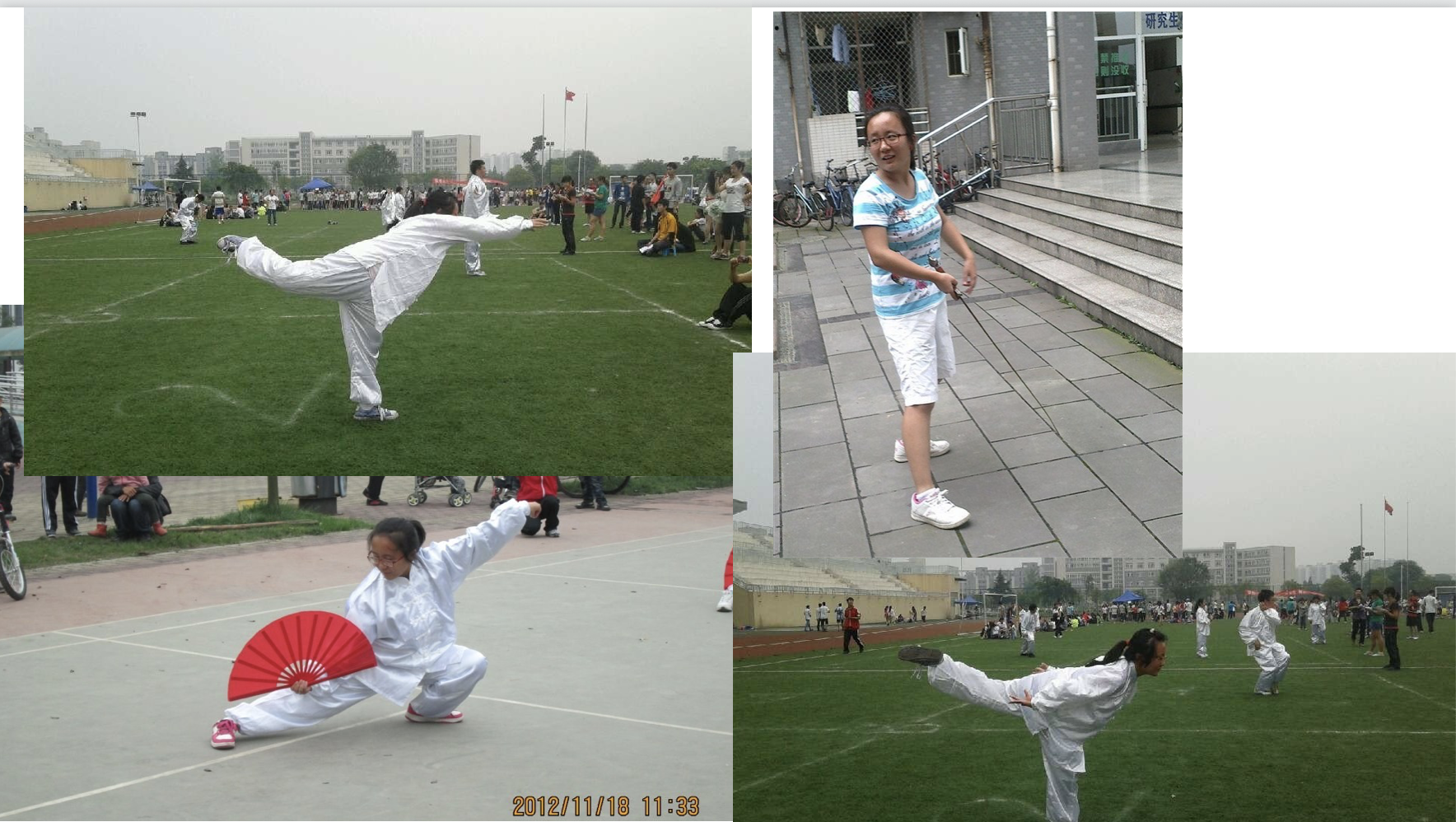
我学过的五禽戏、太极扇、太极剑;当然还有长拳。
到了比赛那天,班长说,要有队形,不然不能出彩。大家同意。于是慌里慌张的来不及吃饭在比赛前几个小时终于把队形敲定了,最后好像是什么双鱼图吧。阴的穿院服(黑色),阳的穿白色衣服。在临近比赛前一个小时,在百会堂前面的草地上匆忙的把队形排练了一遍。我记得好像是背一句,白的蹲下去,再念一句,黑的又蹲下去,然后再念一句,白的又起来,然后再念一句黑的又起来。再向评委充分展示了我们班的双鱼图之后,我们终于可以继续站着背书了。当然,我不是背书。
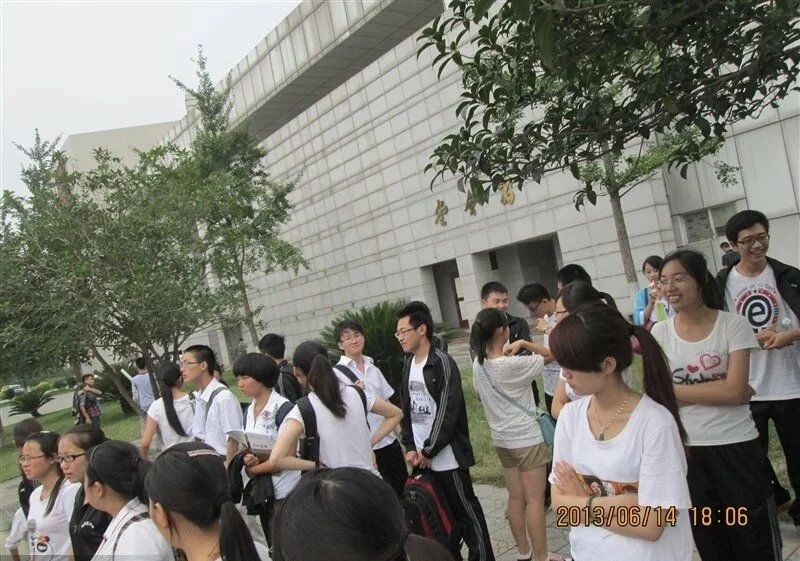
百会堂草地前抱佛脚
决赛开始了,抽签第一位的上了。全班傻眼了。和我们一样,同学站在后面背,只不过前面的功法变成了打太极扇,打太极剑,打太极……接下来的班级基本上也是前面的重复,除了功法不一样,打功法人站的位置不一样,抽的条文不一样外,也没什么不一样了。当时我们就在感慨,临床的传保真是抓得紧啊。相比之下,基础医学院的内经教研室简直了。
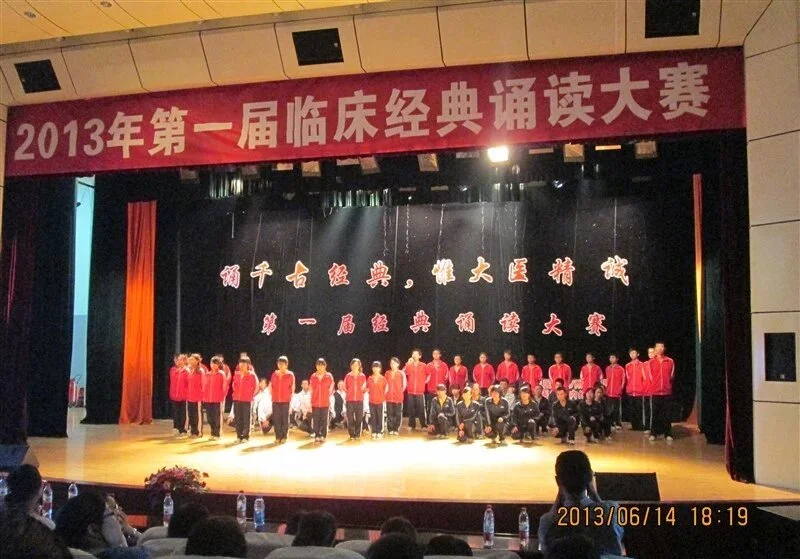
其他班也搞双鱼图
当然,还有的班准备的是舞水袖,或许他们背的《黄帝内经》条文是发大水了。我们班也有跳舞,还是穿的朝鲜服,我都是比赛那天才看到我们班的那小姑娘穿着朝鲜服。为了不太和高丽拉上关系,我们前面的解说是“窈窕淑女,君子好逑”。蹲完起来之后,我们班的五禽戏总教练、功夫太极扇总教练、八段锦总教练,还有长拳和太极拳的热心同学开打了(我们班的易筋经拿不出手,要扬长避短),我们也开始背了。指定条文还好,我也能背。一到抽取的条文,全班的声音瞬降八度,我才知道,原来不是我一个人姓“南郭”,不是我一个人在对口型……底下的评委早就审美疲劳了,台下的观众也是赛完一个班走一个班,谁叫它百会堂不开空调呢?当时班长抽到倒数的出场次数还安慰我们说,这事压轴的好。是好啊,少点儿班看我们出丑。
比赛结果出了,我们一共有10个班,9个班都采取了传保功法战术,也包括舞水袖的,因为她们中间还有一个舞剑的……唯一一个采取小品形式的得了第一,1000块的班费。我们班呢,比赛前一个小时还在练队形的班,得了优秀奖。基友班一班得了三等,他们比我们还惊讶:我们也不会背啊,怎么就三等了呢?
一班的形式也很逗比,背了一段之后,一个穿类似藏族服装的姑娘从人群中出,开始跳传统的水袖舞(不是藏族舞)。可是我们也跳舞了,咋就优秀了呢?三等有钱,优秀可没钱啊。因为我们穿的是朝鲜服,他们是藏族服?那还不如我们从其它班借点儿人,凑成56人,一人穿一民族的服装,然后轮流跳民族舞。
后来内经教研室的老师点评了,相当肯定了临床医学院的传保教学,然后说,为什么你们基本上每个班都这么打呢?和条文有关联吗?你们完全可以根据条文来调整你们的打法啊。比如论五脏的时候,就可以用五禽戏了。
顺带说一句,方药之星我们班两个进个人决赛的都拿星了。
但我们班集体决赛就是悲剧,班级赛只有前三名有钱得,而我们班,解剖之星第四,方药之星第四。千年老四。
现在我一看见临床的活动就觉得要有传保了。
—————
This article was written on May 28, 2014. Reading it now, I still feel that the youthful passion and spirit from those years can never come back.
Today, my roommate and I went to watch the final round of the Star of Herbal Medicine individual competition, a contest for top clinical students.
One part of the competition required the students to come up and present the papers their teams had prepared beforehand. Usually, one person gave the presentation while another was responsible for controlling the slideshow.
Watching this kind of teamwork, I suddenly asked, “Why don’t they perform Five-Animal Exercises?”
My roommate was confused at first. I continued, “Wasn’t our Huangdi Neijing recitation competition last year like this too?”
Last year, we were sophomores. The college had started requiring that course grades be based not only on the final exam but also on ongoing coursework and class performance. Besides taking attendance, giving presentations, doing homework, and reciting passages, someone also came up with the idea that the Huangdi Neijing course should hold a class recitation competition.
Since it affected our regular grades, everyone was, to put it mildly, very unhappy about it.
In our year at the School of Clinical Medicine, there were only three classes of Traditional Chinese Medicine, three classes of Integrated Chinese and Western Medicine, two classes of students in government-directed medical training programs and two seven-year programs in TCM and Integrated Chinese and Western Medicine. With such a small number of classes, we still had to go through preliminary rounds and semifinals.
Of course, this was only a competition in name. It was impossible to eliminate an entire class. What we really cared about was the preliminary score, which was based on the students from the College Student Union’s Learning Department visiting each class during morning study sessions every day and scoring attendance and recitation quality.
Then came the semifinal score. Basically, it meant: “Now you have to stand on stage and recite. Let’s see how well you can do, and we’ll score you again.”
How well could I possibly recite?
At that time, the person responsible for coaching our class for the semifinal was a junior student who practiced Five-Animal Exercises with me. When he saw me stumbling over certain parts during practice, he nodded at me. Later, he told me, “I already went easy on you.”
But that still could not change the fact that I simply could not memorize it. That is a story for later.
All right, the final was approaching. We were about to go on stage and recite. This was a “major event.”
The Information Department students from the college were also filming videos during every class’s morning study session. Every class committee member carried a speaker every morning and chased people along Taiji Avenue, trying to make everyone follow the formation—or rather, follow the background music.
Our class decided to bring out our “heavy hitters” and put on a show.
The School of Clinical Medicine had a long-standing traditional sports team called the Traditional Chinese Exercise Team(Chuan tong bao jian yun dong dui), abbreviated as the “Chuanbao Team.” It included several sections: Yi jin jing, Five-Animal Exercises, Kung Fu Tai Chi Fan, Ba duan jin, and Changquan. Each section had a head coach and several assistant coaches.
After years of development and almost universal participation, the team had created a unique style of performance that could hardly be seen anywhere else, with a strong identity belonging to the School of Clinical Medicine. Our class had always been relatively strong. Among the five programs, we had three head coaches and one assistant coach. These people had to be shown off. It was almost like announcing to all clinical students:
“All the exercises you’re learning, and all the coaches teaching them, are from our class. Our class. Our class.”
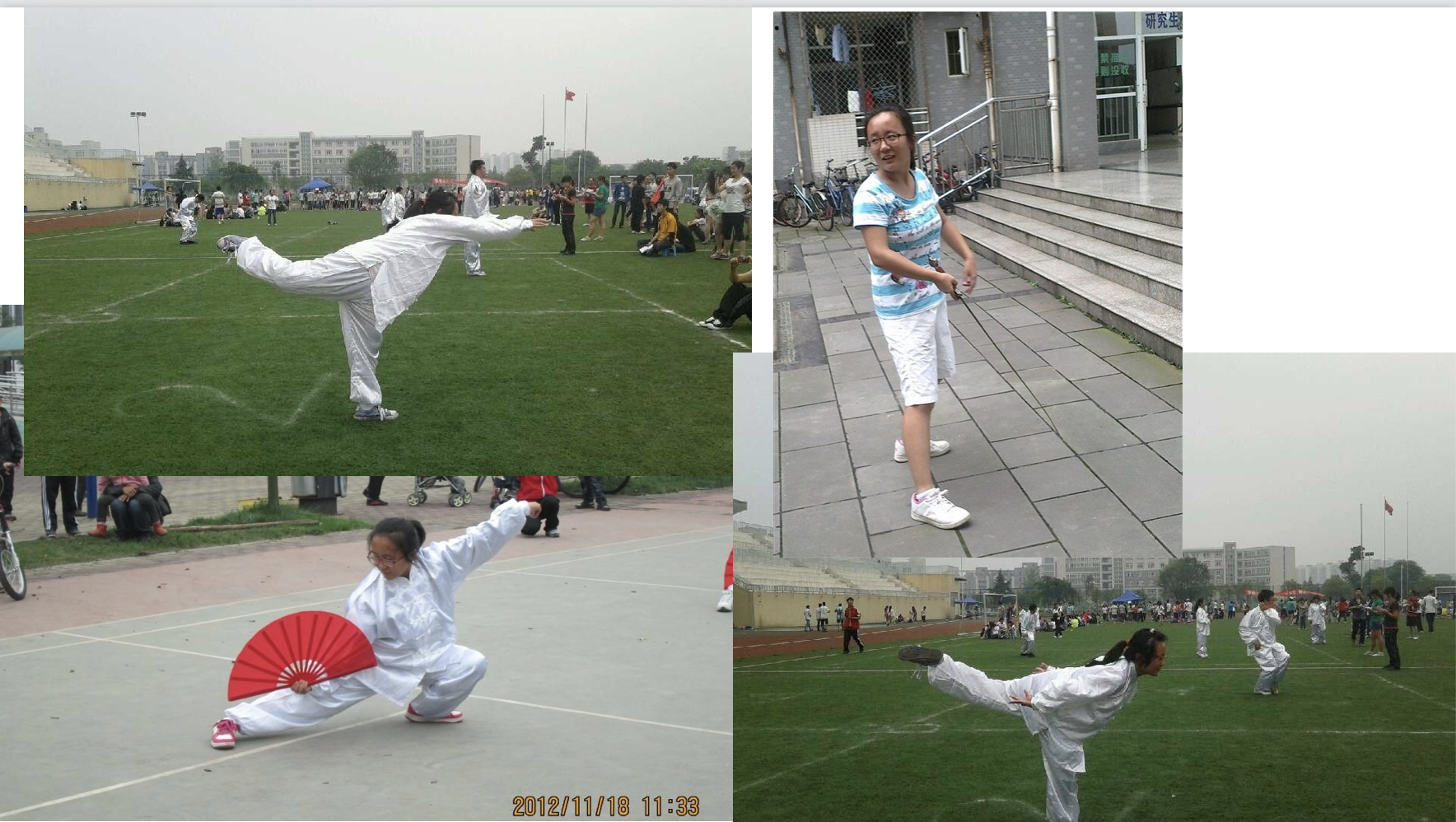
The traditional Chinese exercise forms I learned: Five-Animal Exercises, Tai Chi Fan, Tai Chi Sword, and, of course, Changquan.
On the day of the competition, our class monitor said we needed a formation; otherwise, we would not stand out. Everyone agreed. So, in a panic, without even having time to eat, we finally decided on the formation just a few hours before the competition. I think it was some kind of Taiji double-fish symbol. The yin side wore the school uniforms (black), and the yang side wore white clothes. One hour before the competition, we hurriedly practiced the formation on the grass in front of Baihui Hall.
I vaguely remember the sequence:
Recite one sentence — the white group squats down.
Recite another sentence — the black group squats down.
Recite another sentence — the white group stands up.
Recite another sentence — the black group stands up.
After fully displaying our “double-fish formation” to the judges, we could finally continue standing there and reciting.
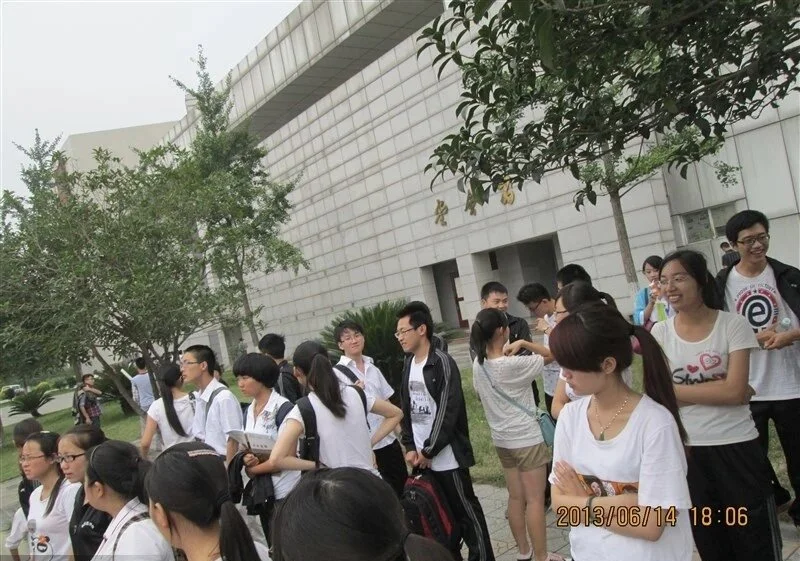
n the grass in front of Baihui Hall.
Of course, I was not one of the people reciting.
The competition began. The first class drawn by lottery went on stage.
The whole class was stunned. Just like us, their classmates stood behind and recited. The only difference was that the exercises performed in front had changed into Tai Chi fan, Tai Chi sword, Tai Chi...
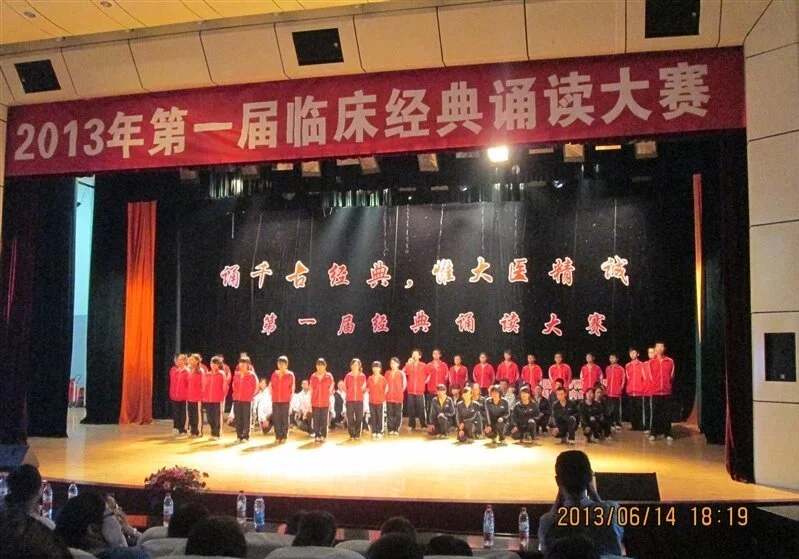
Other classes also created their own Taiji double-fish formations.
The following classes were basically repetitions of the same pattern. Other than different exercises, different positions for the performers, and different passages selected for recitation, there was not much difference.
At that moment, we sighed:
“The Clinical School really goes all in on traditional Chinese exercises.”
Compared with that, the Department of Huangdi Neijing in the School of Basic Medical Sciences was something else.
Of course, some classes prepared water-sleeve dances. Perhaps the passages from Huangdi Neijing they memorized were describing a flood.
Our class also had dancing, and the dancers even wore Korean-style costumes. I did not see those costumes until the day of the competition, when I saw the girls in our class wearing them.
To avoid being associated too much with Korea, our introduction said:
“A graceful lady, a gentleman’s pursuit.”
After the dancers squatted down and stood up, our Five-Animal Exercise head coach, Kung Fu Tai Chi Fan head coach, Baduanjin head coach, along with enthusiastic classmates from Changquan and Tai Chi, began their performance.
(Our Yi jin jing team was not strong enough, so we chose to focus on our strengths and avoid our weaknesses.)
At the same time, we started reciting.
The assigned passages were fine. I could recite those.
But once we reached the randomly selected passages, the entire class’s voices suddenly dropped by eight levels.
Only then did I realize I wasn't the only one who couldn't really recite the passages. I wasn't the only one just mouthing the words.
The judges below had already become tired of watching. The audience also left one class after another as soon as each performance ended.
Who could blame them? Baihui Hall did not even turned on air conditioning.
At that time, our class monitor drew one of the last performance slots and comforted us:
“It’s good to perform at the end. It’s the finale.” Yes, it was good. At least fewer classes would see us embarrass ourselves.
The results came out.
Among our ten classes, nine adopted the traditional Chinese exercise strategy, including the water-sleeve dance group, because they also had someone performing sword movements.
The only class that used a skit format won first place and received 1,000 yuan in class funds.
Our class—the one that was still practicing the formation one hour before the competition—received an “Excellent Award.”
Our close-friend class, Class One, won third place. They were even more surprised than us:
“We can’t even recite it. How did we get third place?”
Their format was also hilarious. After reciting a section, a girl wearing something resembling Tibetan clothing came out from the crowd and started performing a traditional water-sleeve dance (not a Tibetan dance).
But we danced too. Why did we only get an Excellent Award?
Third place came with money. Excellent Award did not.
Was it because we wore Korean-style costumes while they wore Tibetan-style costumes?
Then we should have borrowed people from other classes, gathered 56 students, each wearing a different ethnic costume, and taken turns performing different ethnic dances.
Later, the teachers from the Department of Huangdi Neijing gave their comments. They highly praised the Clinical School’s teaching of traditional Chinese exercises, but then asked:
“Why does almost every class perform the same kind of exercises? Are they related to the passages you recited? You could completely adjust the exercises according to the content of the passages. For example, when discussing the five organs, you could use Five-Animal Exercises.”
As a side note, the two classmates from our class who entered the individual final of the Star of Herbal Medicine competition both won awards. But our class performance in the group competitions was tragic. Only the top three classes received prize money. Our class ranked fourth in the Star of Anatomy competition and fourth in the Star of Herbal Medicine competition.
The eternal fourth place.
Now whenever I see any activity organized by the Clinical School, my first thought is:
“There must be traditional Chinese exercises involved.”
